A front garden that works in a cold-winter city
The front garden takes the hardest weather on the lot. Here is how to plant it so spring arrives with something still standing.
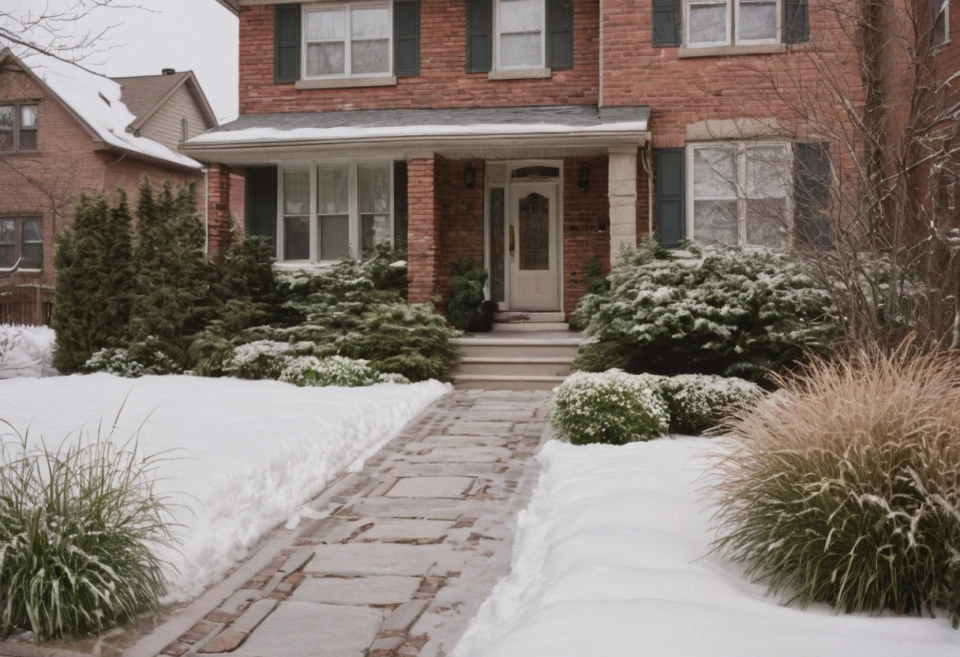
By late February the front garden is a grey ridge of plowed snow along the curb, a crust of grit on the walk, and a few flattened stems poking through. The back garden gets the attention, but the front bed takes road salt, wind off the street, compaction from boots and the weight of the snowblower's last pass. Deciding what belongs there means settling three things first: where the snow will land, where the salt goes, and how much of the bed the city tree already owns. Once those are mapped, the planting list gets short and sensible.
Start by mapping the abuse
Spend one winter watching rather than planting. Note where the plow pushes its ridge, where you shovel the walk, where the downspout empties, and where meltwater refreezes into a sheet on the path. Those spots are not failures of gardening; they are conditions. A bed within a metre or two of the curb receives spray every time a car passes on a slushy day. Salt draws water out of foliage and soil, so needles brown on the street side while the sheltered side stays green. Sand and grit compact clay and clog the surface.
The fix is zoning, not heroics. Put a band of tolerant, replaceable, cheap-to-renew plants along the street edge, and keep anything fussy well back toward the house. Raise the crown of the bed slightly if drainage is poor, and slope it away from the foundation. If you are also sorting out downspouts and grading, do that work first; our notes on getting a house ready for winter cover the water side of the same problem.
Perennials and shrubs that earn their place
Choose for hardiness with a margin, not for the catalogue photograph. Toronto sits in a cold-winter zone, but the front bed is harsher than the zone map suggests: exposed, windswept, alternately frozen and thawed, with little insulating snow where you have cleared it. Plants rated a zone colder than yours tend to shrug this off. Look for species that tolerate clay, drought in July and wet feet in March, because a single bed will offer all three in a year.
- Structure shrubs: serviceberry, ninebark, shrubby dogwoods (red-osier and its relatives), dwarf bush honeysuckle types, junipers and low mugo pine on the dry sunny edge.
- Salt-band candidates: rugosa rose, sea buckthorn where space allows, potentilla, daylilies, sedum, ornamental grasses such as little bluestem and switchgrass.
- Mid-bed perennials: coneflower, black-eyed Susan, Russian sage in sharp drainage, catmint, hardy geranium, asters and goldenrod for late colour.
- Shade under the tree: hosta, epimedium, hellebore in a sheltered pocket, wood sedge, and spring bulbs that finish before the canopy fills.
Plant in drifts of five or seven rather than single specimens dotted about. Mass reads clearly from the sidewalk, survives the loss of one plant, and is easier to weed. Leave the seed heads standing; they carry the bed through November and feed birds. Cut perennials back in early spring, not autumn, so the stubble holds whatever snow does fall.
The boulevard tree is not yours to redesign
Most Toronto streets have a city tree in the grass strip between sidewalk and curb. It is city property, and the rules about pruning, planting near it, or altering the strip are set by the municipality, not by the homeowner. Before you dig, edge, raise a bed or run irrigation through that area, check the current guidance on City of Toronto trees and tree protection, and call the city if the answer is unclear. Private trees on your own lot may also be protected depending on size and species; ask before removing anything substantial.
Horticulturally, the tree wins. Its feeder roots sit in the top layer of soil, exactly where a new bed would go. Digging severs them, adding soil buries them, and both cause slow decline you will not see for years. Under a mature maple or honey locust the ground is also dry and shaded by midsummer. Work with it: shallow-rooted, drought-tolerant groundcovers, mulch kept off the trunk flare, no edging trenches, no landscape fabric pinned down with stakes. Water new plantings deeply for their first two summers, because the tree will otherwise take every drop.
Four seasons, including the ugly one
A front garden that only performs in June is half a garden. Plan the calendar backwards from winter. Bark colour on dogwood stems, the peeling cinnamon bark of paperbark maple, persistent berries on serviceberry and crabapple, the tan plumes of grasses above the snowline, and the dark mass of a juniper: these are what you actually look at from December to March. Evergreens should be a minority, perhaps a third of the planting, enough for bones without turning the bed into a hedge.
Spring comes from bulbs and early shrubs, summer from the perennial drifts, autumn from foliage and seed heads. Aim for something interesting in each month rather than a peak in one. If the front of the house faces the street with nowhere to hide, the same layering logic that shapes a bed also shapes sightlines; privacy as architecture looks at how planting and levels control what passersby see without a wall of cedar.
Salt, snow and the spring repair
You cannot stop the salt, but you can reduce the dose. Use sand or a coarse grit for traction on your own walk and shovel promptly so less de-icer is needed. Where you do use a product, read the label and apply sparingly; some are gentler on plants than others, and none are harmless in quantity. Keep the plow ridge off the crowns of shrubs where you can, and knock down the pile before it compacts into ice.
In March, flush the street-side band with a slow, deep watering once the ground has thawed enough to accept it, which leaches accumulated salts below the roots. Rake out grit, cut back damaged stems to live wood, and wait until mid-spring before judging what died. Buds on bare branches are often alive when the tips look dead. Our spring check after the thaw covers salt damage on steps and masonry alongside the beds.
What to do next
- Walk the frontage on a slushy day and mark the salt band, the snow-pile line and the wet spot on a sketch.
- Confirm the city tree's location and the rules for the boulevard strip before any digging.
- Fix grading and downspout discharge so water leaves the bed and the foundation.
- Choose a short palette: two structure shrubs, three or four perennials in drifts, one grass, bulbs underneath.
- Plant in early autumn or late spring, mulch lightly, and water deeply through the first two summers.
- Leave stems standing for winter and set a March date for flushing, raking and pruning.
General information only: confirm requirements with the City of Toronto or your municipality, the province, or a licensed professional before you act. Editorial standards · Corrections