Getting a house ready for winter in the right order
Most pre-winter jobs take an afternoon each. Order matters more than effort, because some tasks depend on others being done first.
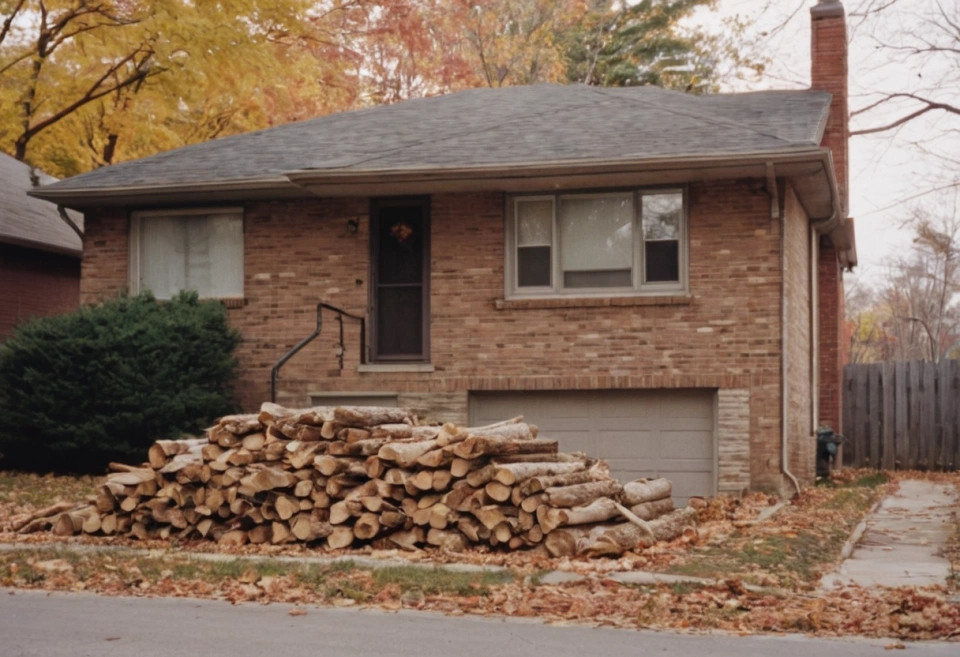
The leaves come down all at once in a Toronto November, and the first hard freeze usually follows within a few weeks. That short window is when most of the useful winter work has to happen. Once the ground freezes and the ladders get slippery, several jobs become harder or pointless until spring. This article sets out what to do, why each task matters, and a sensible order so that nothing gets done twice.
Start with water: eavestroughs and downspouts
Water damages houses in winter. Snow on a roof is harmless until it melts, and meltwater needs somewhere to go. If the eavestroughs are packed with maple leaves and shingle grit, that water spills over the edge, runs down the siding and pools beside the foundation, where it freezes and works its way into every crack it can find.
Clean the troughs by hand or with a scoop, working from a ladder set on firm, level ground with a second person footing it. Flush them with a hose afterward and watch where the water comes out. Downspouts should discharge well away from the foundation wall, not into a splash block sitting against the brick. Extensions are cheap and make a real difference on lots where the grade slopes toward the house.
While you are up there, look at the trough itself. Sagging sections, rust streaks on aluminum, seams that weep, spikes pulling out of the fascia: these are small repairs now and larger ones in February. Older Toronto houses often have half-round galvanized troughs or, on some century homes, no troughs at all on certain elevations. If your house has an older drainage arrangement you do not understand, the same questions an inspector would ask about grading and water management apply here, and our notes on what a home inspection covers in an older GTA house explain how roof, drainage and foundation fit together.
Do this job before the taps and the furnace. It becomes genuinely unpleasant once ice arrives, and everything downstream depends on the roof shedding water properly.
Shut off the outdoor taps from inside
A garden hose left connected to an outdoor tap is one of the most common causes of a burst pipe in a Toronto winter. Water sits in the hose bibb, freezes, expands and splits the fitting. The split often does not leak until the thaw, and then it leaks inside the wall cavity.
The reliable method is to find the shut-off valve inside the house, usually in the basement ceiling near where the pipe passes through the rim joist, close it, then open the outdoor tap and let the remaining water drain out. Many valves have a small bleeder cap on the side; open it over a bucket to empty the trapped section fully. Leave the outdoor tap open through the winter so any residual water has room to expand.
Frost-free sillcocks, the long-stemmed kind whose seat sits inside the warm wall, are more forgiving but not immune. They still need the hose disconnected, and they still fail if installed on a slight downward slope toward the house instead of draining outward. If you do not know which type you have, treat every tap as the old kind and shut it off inside.
While you are in the basement looking for shut-offs, note where the main water shut-off is and make sure everyone in the household can find it. That knowledge is worth more than any single repair.
Book the furnace service early
Heating contractors in the GTA are busiest on the first cold snap, when everyone discovers at once that the furnace will not light. Booking a service call in October or early November means you get an appointment rather than a place in a queue.
A standard annual service on a gas forced-air furnace includes cleaning the burners and flame sensor, checking the heat exchanger for cracks, testing the safety switches, inspecting the venting and confirming the condensate drain is clear on high-efficiency units. On older atmospheric furnaces the technician will also check for backdrafting, which matters in a house that has had new windows or additional insulation added since the furnace was installed. Tighter houses need combustion air from somewhere.
Between professional visits, change the filter yourself. A loaded filter makes the blower work harder, reduces airflow and can trip the high-limit switch, which shuts the furnace down on a cold night. Check the filter monthly through the heating season and replace it when it looks grey rather than waiting for a calendar date. Write the installation date on the frame with a marker.
If your house has hot water radiators, a boiler or an older gravity system, the same principle applies: get a qualified technician to look at it before you need it. Our overview of older systems in GTA homes describes what buyers and renovators commonly find, including the wiring and plumbing that often share the basement with the heating plant.
Find and seal the drafts
Once the gutters are clear and the furnace is running properly, turn to the envelope. Cold air leaking in around windows and doors makes rooms uncomfortable and forces the furnace to run longer. Sealing a house too tightly without thinking about ventilation creates its own problems, so work sensibly rather than aggressively.
On a windy day, hold the back of your hand near the edges of window sashes, door frames, electrical outlets on exterior walls and the hatch to the attic. You will feel the leaks. Weatherstripping on doors wears out and compresses; replace it with a profile that matches the gap. Window sashes on older double-hungs often need the locks tightened to pull the meeting rails together, which does more than any amount of caulking.
- Replace worn door sweeps and threshold seals.
- Re-caulk exterior trim where the old bead has cracked or pulled away, using a paintable exterior sealant.
- Add foam gaskets behind outlet and switch plates on exterior walls.
- Check that the attic hatch is insulated and weatherstripped; it is often the largest single leak in the ceiling plane.
- Confirm bathroom and kitchen exhaust fans vent outside, not into the attic.
Do not seal the gaps around the furnace flue or the combustion air intake. Those openings exist for a reason.
Set up snow clearing before the first storm
Buy the shovel, the ice melter and the roof rake in October, when the hardware store has stock and nobody is panicking. A push shovel with a wide blade handles most Toronto snowfalls; a smaller scoop is useful for steps and paths. Keep a bag of calcium chloride or a pet-safe blend by the door rather than rock salt, which damages concrete and kills the planting along the walk. Where you pile snow matters as much as how you clear it; our piece on planning a front garden for a cold-winter city covers salt tolerance and snow storage in more detail.
If you have a long driveway or mobility concerns, decide now whether you will hire a clearing service for the season. Contracts fill up early, and a per-visit arrangement agreed in advance is cheaper than an emergency call after a heavy fall.
Know where the snow will go. On a narrow city lot, the pile at the end of the driveway can block the downspout extension you just installed, sending meltwater back toward the foundation. Plan the pile location before the first storm, not during it.
A simple order, and what to do this week
The sequence below works because each step either enables the next or protects the work already done:
- Clear eavestroughs, flush downspouts, add extensions, note any repairs needed.
- Disconnect hoses, shut off outdoor taps inside, drain the lines, leave taps open.
- Book furnace service; change the filter yourself now and monthly after.
- Walk the house on a windy day, seal drafts, check attic hatch and exhaust venting.
- Stock snow gear, choose a pile location, arrange clearing help if needed.
This week, pick the first item and do it. The rest follow naturally over two or three weekends. When the thaw comes in March, walk the perimeter again and look for what winter revealed; our spring check after the thaw picks up where this list leaves off.
General information only: confirm requirements with the City of Toronto or your municipality, the province, or a licensed professional before you act. Editorial standards · Corrections